Macbeth
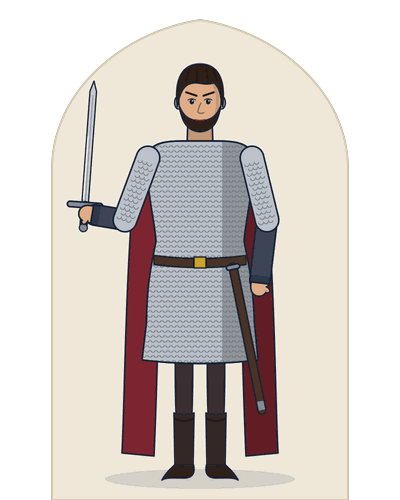
A Scottish general, Thane of Glamis and then of Cawdor. Tempted by the Witches and urged on by his wife, he murders King Duncan, rules as a tyrant and is killed by Macduff.

Macbeth is William Shakespeare’s tragedy of a Scottish general who, tempted by three Witches and urged on by his wife, murders King Duncan, rules as a tyrant and is killed by Macduff. This Macbeth study guide gives you the complete play with a plain modern English line under every line of verse, a unit for every scene or group of scenes, and the answers examiners look for.
The book is being prepared for Amazon now. Send one short email and you will hear as soon as it is out.
Email me when it is outThis opens your email app with a short message to qaisar@janjuaslitnotes.com already written: just press Send. Your email address is used only to tell you when this book is out. How your email is used.
Macbeth is a tragedy in five acts: three Witches promise a Scottish general that he will be king, he murders King Duncan to make it come true, and his rule of blood ends when Macduff kills him. Here is the whole play act by act, as the book sums it up.
Three Witches plan to meet Macbeth. A wounded Sergeant tells Duncan, King of Scotland, how bravely his general Macbeth has fought, and Duncan gives Macbeth the title of the traitor Thane of Cawdor; a thane is a Scottish lord. On a heath the Witches hail Macbeth as Thane of Glamis, Thane of Cawdor and “king hereafter” (1.3.50). They tell his fellow general Banquo, “Thou shalt get kings, though thou be none” (1.3.67). When Ross brings the title, Macbeth begins to think of murder. Duncan names his elder son, Malcolm, as his heir. At Inverness Lady Macbeth reads her husband’s letter and calls on evil spirits to “unsex me here” (1.5.40). Duncan comes to stay. Macbeth decides not to kill him, but his wife mocks his courage, and he gives way: “I am settled” (1.7.79).
After midnight Macbeth sees “A dagger of the mind” (2.1.38) and kills the sleeping King. He dares not take the daggers back, so Lady Macbeth does it and smears the grooms with Duncan’s blood. The drunken Porter pretends to keep the gate of hell. Macduff finds the King dead, and Macbeth kills the two grooms. Duncan’s sons flee, Malcolm to England and Donalbain to Ireland, and Macbeth goes to Scone to be crowned.
Now king, Macbeth fears Banquo and the Witches’ promise to Banquo’s children. His murderers kill Banquo, but Fleance escapes. At a feast Banquo’s Ghost, seen only by Macbeth, sits in his place. Macbeth decides to go on: “I am in blood / Stepp’d in so far” (3.4.136-137) that turning back is as hard as going forward. Hecate plans to ruin him with false hopes. Lennox hears that Macduff has gone to England for help.
Three apparitions tell Macbeth to beware Macduff, that “none of woman born / Shall harm Macbeth” (4.1.80-81), and that he is safe until Birnam wood comes to Dunsinane. A show of eight kings shows that Banquo’s heirs will rule. Macbeth has Macduff’s wife and children murdered. In England Malcolm tests Macduff’s loyalty; an English army under Siward is ready. Ross brings the news of the murders, and Macduff vows revenge.
At Dunsinane Lady Macbeth walks in her sleep and tries to wash away blood that only she can see: “Out, damned spot! out, I say!” (5.1.31). Malcolm’s soldiers carry boughs from Birnam wood to hide their numbers. Lady Macbeth dies, and life seems to Macbeth “a tale / Told by an idiot, full of sound and fury, / Signifying nothing” (5.5.26-28). He meets Macduff, who was “from his mother’s womb / Untimely ripp’d” (5.8.15-16). Macduff kills him, and Malcolm is hailed “King of Scotland!” (5.8.59).
Shakespeare wrote Macbeth about 1606. Its only early text is the First Folio of 1623, and it is the shortest of his tragedies: five acts and 28 scenes.
13 units, one for each scene or group of scenes, then the essays and the revision. Every unit follows the same plan, so you always know where to look.
The text is the Cambridge Shakespeare, edited by William George Clark and William Aldis Wright (Volume VII, Macmillan, 1865), with obvious misprints corrected. Every quotation and line number in the book is checked against it, and every quotation carries act, scene and line: 1.3.70 means Act 1, Scene 3, line 70.
Paperback, 6 x 9 in, 367 pages, and a Kindle ebook.
Available on Amazon
Unit 5: The Dagger and the Murder of Duncan, complete, with the title page, A Note from the Author and the contents.
Every line of the play’s verse has a plain modern English line under it, and the hard words are explained after the passage. This is Macbeth just after the murder of Duncan, as the book prints it.
“If you have opened this book, you probably have an exam coming, and a short play that moves at great speed. Macbeth can feel dark and strange at first: witches and riddles, old words, and one murder after another before you have caught your breath. None of it needs to frighten you. You need to know what is happening, why the characters act as they do, and how to write about it well.”
The murder and the knocking Act 2, Scene 2 · Lines 60 to 63
Will all great Neptune’s ocean wash this blood
Will all great Neptune’s ocean wash this blood
Clean from my hand? No; this my hand will rather
Clean from my hand? No, this hand of mine will rather
The multitudinous seas incarnadine,
Turn the countless seas blood-red,
Making the green one red.
Making the green sea all red.
Words60 Neptune: Roman god of the sea
The book gives one unit to each scene or group of scenes: 13 units in all, from the Witches’ first meeting to the fall of Macbeth. Each line below is the book’s own summary of the scene.
Three Witches plan to meet Macbeth. A wounded Sergeant praises Macbeth’s courage, and Duncan gives Macbeth the traitor Cawdor’s title.
The Witches hail Macbeth as Glamis, Cawdor and future king, and promise Banquo royal heirs. Ross brings the Cawdor title; Macbeth thinks of murder.
Duncan names Malcolm his heir; Macbeth hides dark wishes. Lady Macbeth reads his letter and prays to evil spirits for cruelty.
Duncan praises the castle’s sweet air. Macbeth argues himself out of the murder, but his wife shames him and gives him a plan.
After midnight Macbeth sees a dagger in the air. He kills Duncan; his wife returns the daggers he dares not take back.
A drunken Porter plays hell’s gatekeeper. Macduff finds Duncan murdered; Macbeth kills the grooms and is soon named king. Duncan’s sons flee.
Now king, Macbeth fears Banquo and his promised heirs. He hires murderers, telling his wife nothing; Banquo dies, but Fleance escapes.
At his feast Macbeth hears that Banquo is dead but Fleance has escaped. Banquo’s Ghost, seen only by him, sits in his place, then returns.
Hecate plans Macbeth’s ruin. Lennox mocks the tyrant. Apparitions prophesy, and Macbeth sees Banquo’s royal heirs.
Lady Macduff accuses her absent husband of deserting his family. A Messenger warns her to flee; then Macbeth’s murderers kill her son.
Malcolm tests Macduff by pretending to be worse than Macbeth, then says an English army is ready. Ross reports that Macduff’s family has been slaughtered.
A Doctor and a Gentlewoman watch Lady Macbeth sleepwalk. She rubs at blood only she can see and relives the murders.
Deserted, Macbeth faces Malcolm’s army. His queen dies, Birnam wood seems to move, and Macduff kills him.
Macbeth turns on a small circle of characters: a general and his wife, the King they murder, the Witches who tempt him, and the men who bring him down. The book has fourteen drawings in one house style; here they are with the book’s own notes on each.
A Scottish general, Thane of Glamis and then of Cawdor. Tempted by the Witches and urged on by his wife, he murders King Duncan, rules as a tyrant and is killed by Macduff.
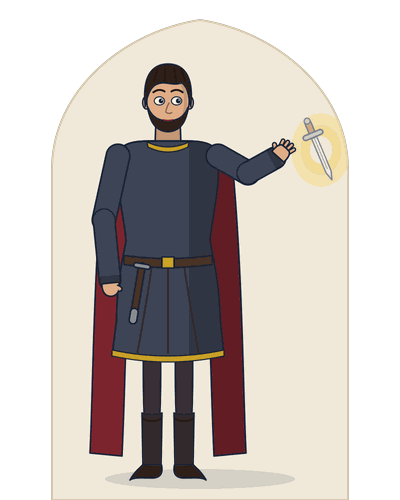
After midnight Macbeth sees a dagger in the air. He kills Duncan; his wife returns the daggers he dares not take back.
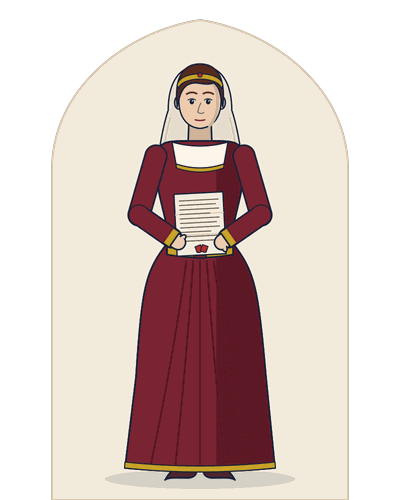
Macbeth’s wife. She drives him to the murder, then breaks under guilt, walks in her sleep and dies off stage.
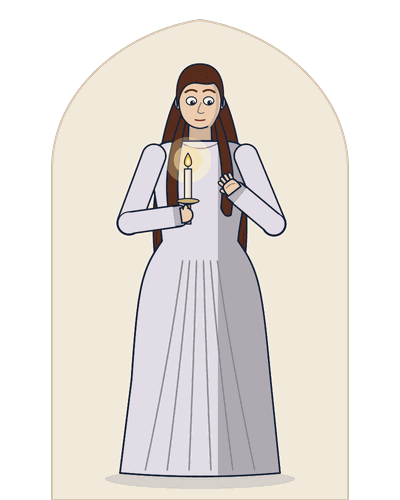
A Doctor and a Gentlewoman watch Lady Macbeth sleepwalk. She rubs at blood only she can see and relives the murders.
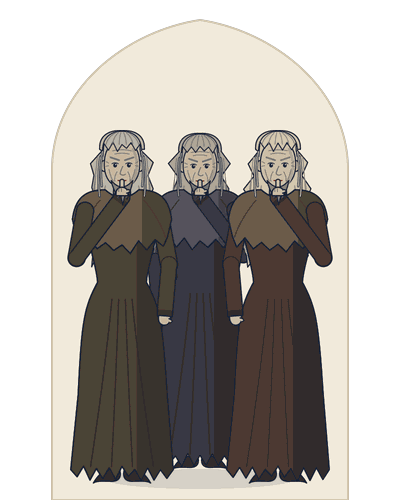
Three “weird sisters” (1.3.32) who foretell Macbeth’s future.
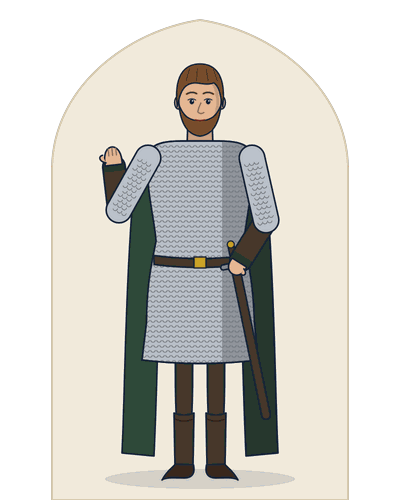
Macbeth’s fellow general and his son. The Witches promise that Banquo’s descendants will be kings, so Macbeth has him murdered, but Fleance escapes. Banquo’s Ghost appears at the feast.
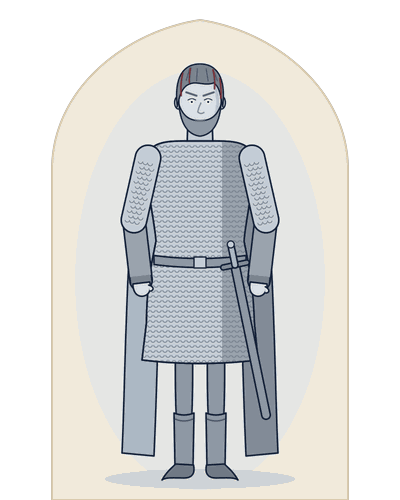
At his feast Macbeth hears that Banquo is dead but Fleance has escaped. Banquo’s Ghost, seen only by him, sits in his place, then returns.
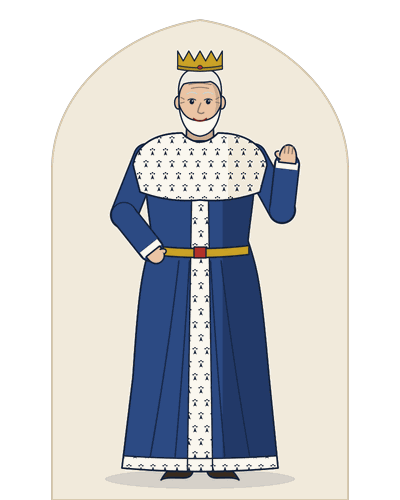
King of Scotland, gracious and too trusting, murdered in his sleep as Macbeth’s guest.
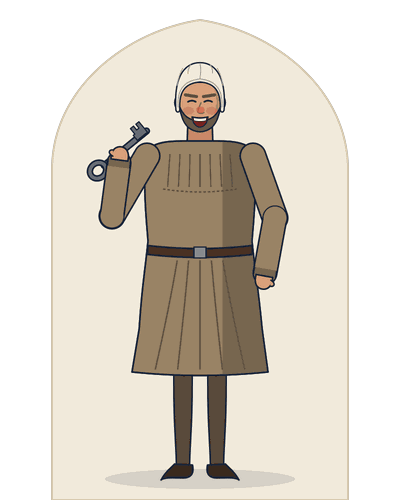
The drunken gatekeeper, who pretends to keep the gate of hell.
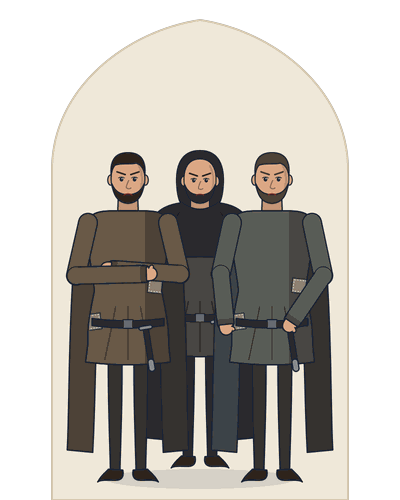
Now king, Macbeth fears Banquo and his promised heirs. He hires murderers, telling his wife nothing; Banquo dies, but Fleance escapes.
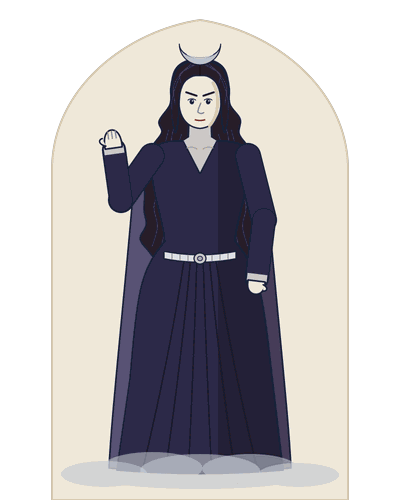
The Witches’ mistress, who scolds them in 3.5 and joins them in 4.1.
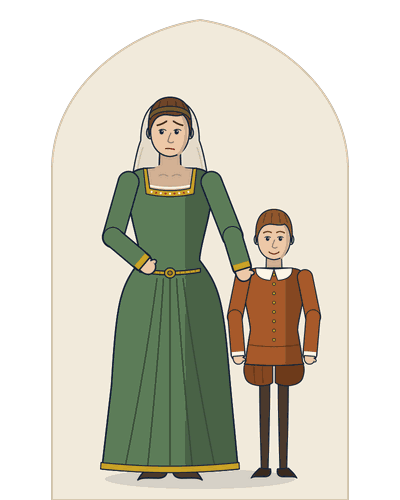
Macduff’s wife and their clever young son, murdered at their castle in Fife.
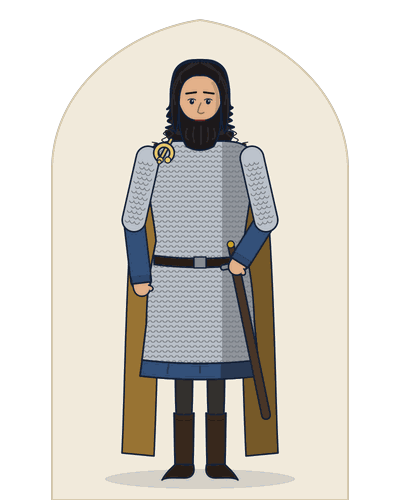
Thane of Fife. He finds Duncan’s body, flees to England, loses his family to Macbeth’s murderers and kills Macbeth.
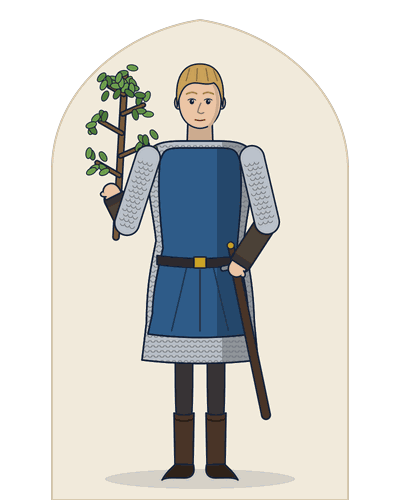
Duncan’s sons. Malcolm, the elder, named Prince of Cumberland, flees to England, tests Macduff and leads the army against Macbeth. Donalbain flees to Ireland.
These are thirteen of the forty key passages in the book’s passage bank, each with its speaker, its act, scene and line in the Cambridge text, and the first thing the book says about why it matters.
| Passage | Speaker and line | Why it matters |
|---|---|---|
| “Fair is foul, and foul is fair. / Hover through the fog and filthy air.” | The three Witches1.1.10-11 | It is the play’s first riddle: good and evil change places, and nothing is what it seems. |
| “And oftentimes, to win us to our harm, / The instruments of darkness tell us truths,” | Banquo1.3.123-124 | Banquo sees the trap: evil wins our trust with small truths, then ruins us in great things. |
| “There’s no art / To find the mind’s construction in the face:” | Duncan1.4.11-12 | This is dramatic irony, where the audience knows more than the characters. |
| “yet do I fear thy nature; / It is too full o’ the milk of human kindness / To catch the nearest way:” | Lady Macbeth1.5.15-17 | She knows that he has ambition but not the evil that must go with it. |
| “The raven himself is hoarse / That croaks the fatal entrance of Duncan / Under my battlements. Come, you spirits / That tend on mortal thoughts, unsex me here,” | Lady Macbeth1.5.37-40 | She asks evil spirits to fill her with “direst cruelty!” (1.5.42), so some readers call her “the fourth witch”. |
| “I have no spur / To prick the sides of my intent, but only / Vaulting ambition, which o’erleaps itself / And falls on the other.” | Macbeth1.7.25-28 | He names his own fault: ambition is a rider who jumps too high and falls on the far side. |
| “Is this a dagger which I see before me, / The handle toward my hand? Come, let me clutch thee.” | Macbeth2.1.33-34 | The dagger shows a mind already given to murder. |
| “Will all great Neptune’s ocean wash this blood / Clean from my hand? No; this my hand will rather / The multitudinous seas incarnadine, / Making the green one red.” | Macbeth2.2.60-63 | Blood stands for a guilt that nothing can wash away. |
| “here’s an equivocator, that could swear in both the scales / against either scale;” | The Porter2.3.8-9 | An equivocator says things that are true in one sense and false in another, and some scholars link the joke to the trial of the Jesuit Henry Garnet in 1606. |
| “I am in blood / Stepp’d in so far that, should I wade no more, / Returning were as tedious as go o’er:” | Macbeth3.4.136-138 | Going back through the river of blood would be as hard as going on, so he goes on. |
| “Out, damned spot! out, I say! One: two: / why, then ’tis time to do’t. Hell is murky.” | Lady Macbeth5.1.31-32 | The night of the murder plays again in her mind, and the woman who thought that a little water would clear them of the deed cannot clean her hands. |
| “To-morrow, and to-morrow, and to-morrow, / Creeps in this petty pace from day to day,” | Macbeth5.5.19-20 | Life is now “a tale / Told by an idiot, full of sound and fury, / Signifying nothing.” (5.5.26-28). |
| “Macduff was from his mother’s womb / Untimely ripp’d.” | Macduff5.8.15-16 | The last promise fails, for Macduff was born, but not by a natural birth. |
The book answers the twelve questions examiners set most often on Macbeth with twelve model essays. Each is written in full for long papers, with a marked cut line where a shorter answer can stop. These are the topics:
Four pages as they appear in the book: the title page, a scene card, a page of text with modern English, and a critical note. Select a page to see it larger.
Short, direct answers taken from the Macbeth study guide itself.
Yes. It prints the complete play from the Cambridge Shakespeare, edited by W. G. Clark and W. A. Wright (Volume VII, Macmillan, 1865), in 13 units, one for each scene or group of scenes. Under every line of verse there is a plain modern English line; in the few prose passages, such as the Porter and the sleepwalking scene, the modern English follows the speech as one paragraph.
Yes. Every line of verse has a plain modern English line beneath it, and every prose speech is followed by its meaning in modern English. “The multitudinous seas incarnadine” (2.2.62), for example, becomes “Turn the countless seas blood-red”.
The book follows six themes through the play: ambition, the supernatural, guilt, seeming (appearance and reality), kingship and violence. Every point on a scene card carries its theme tag, and each tag leads to the essays that need it; guilt, for example, leads to the essays on Lady Macbeth, on Macbeth and Lady Macbeth, and on guilt and conscience.
The book’s twelve model essays answer the Macbeth questions examiners set most often: Macbeth as a tragic hero, Lady Macbeth, Macbeth and Lady Macbeth, the Witches and the supernatural, fate and free will, ambition, guilt and conscience, appearance and reality, kingship and tyranny, the foils, the Porter scene, and imagery. Each essay is written in full for long papers, with a marked cut line where a shorter answer can stop.
Only in Act 1, the book argues. There she calls on evil spirits and tempts Macbeth towards the crown, as the Witches do. But she cannot kill Duncan, she finds no joy in the crown, and guilt destroys her: a witch has no conscience to lose, and Lady Macbeth has one. The label fits her part in Act 1, not the whole woman.
No, the book argues. The Witches’ prophecies say what will happen, never how, and every one made to Macbeth comes true; but they never tell him to murder, and Banquo, who hears them too, stays loyal. Macbeth chooses each crime himself: he is not a victim of fate but the maker of his own downfall.
Macbeth kills Macdonwald in battle, Duncan, the two grooms and Young Siward. His murderers kill Banquo, while Fleance escapes, and Macduff’s son; Ross reports that Macduff’s wife and children were killed too. Macduff kills Macbeth, and Lady Macbeth’s death is reported, not shown.
Not always. The book keeps the line numbers of the Cambridge text of 1865, which numbers lines differently from some modern editions, and in Act 5 other editions may divide the scenes differently. Examiners name passages by act and scene, so know each passage by its sense as well as by its number.
The free PDF sample has the title page, A Note from the Author, the contents and the whole of Unit 5: The Dagger and the Murder of Duncan, as it appears in the book.